Announcements that land
A screen does not need to be opened.
Employee communication
Most internal communication is written for people with an inbox. On a production floor, a ward or a depot, the screen on the wall is the only channel that reaches everyone on every shift.
Plans, prices and trials are set by your ScreenQube partner.
Where it ends up
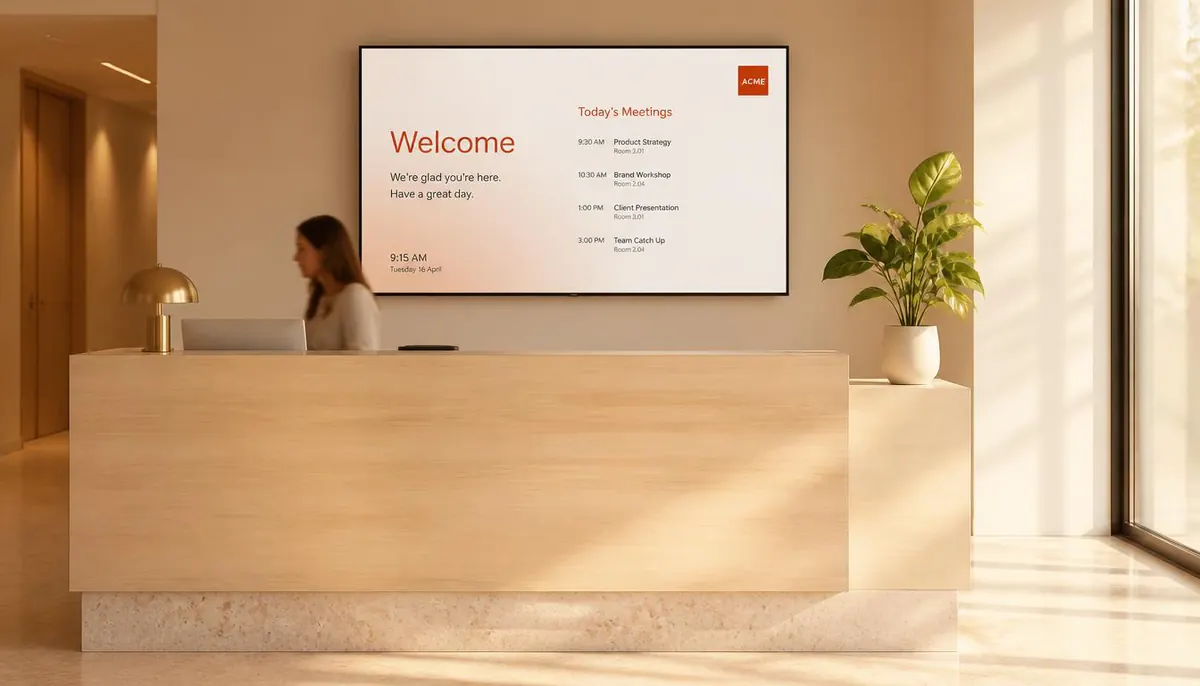
The screen above is what you publish. This is where it ends up.
How it is made
Named against the product's own modules rather than invented for a marketing page.
One composition, published to the facilities that should carry it.
Publish carries the schedule, so a night-shift board is a schedule and not a second system.
Users belong to groups; groups decide what a person can reach.
The App Store carries weather, news, currency, YouTube and tickers, beside your own media.
What you get
A screen does not need to be opened.
The notices that legally have to be visible, visible.
Names and faces, on the wall people walk past.
What this shift is walking into.
Publish targets the facilities you choose.
Audits records who published what.
Who runs this
Nearby
Questions
Not that we can evidence. ScreenQube publishes to screens.
Yes. Each site is a facility, and users belong to groups that decide what they can reach.
Reports run in three kinds — media, uptime and audit logs; Audits covers who changed what.
An Android player app on displays you own.