Levels, zones and departments
The information somebody is standing there looking for.
Wayfinding
A printed directory is wrong the first time a department moves. A published one is a composition: change the line, publish, and every board in the building carries it.
Plans, prices and trials are set by your ScreenQube partner.
Where it ends up
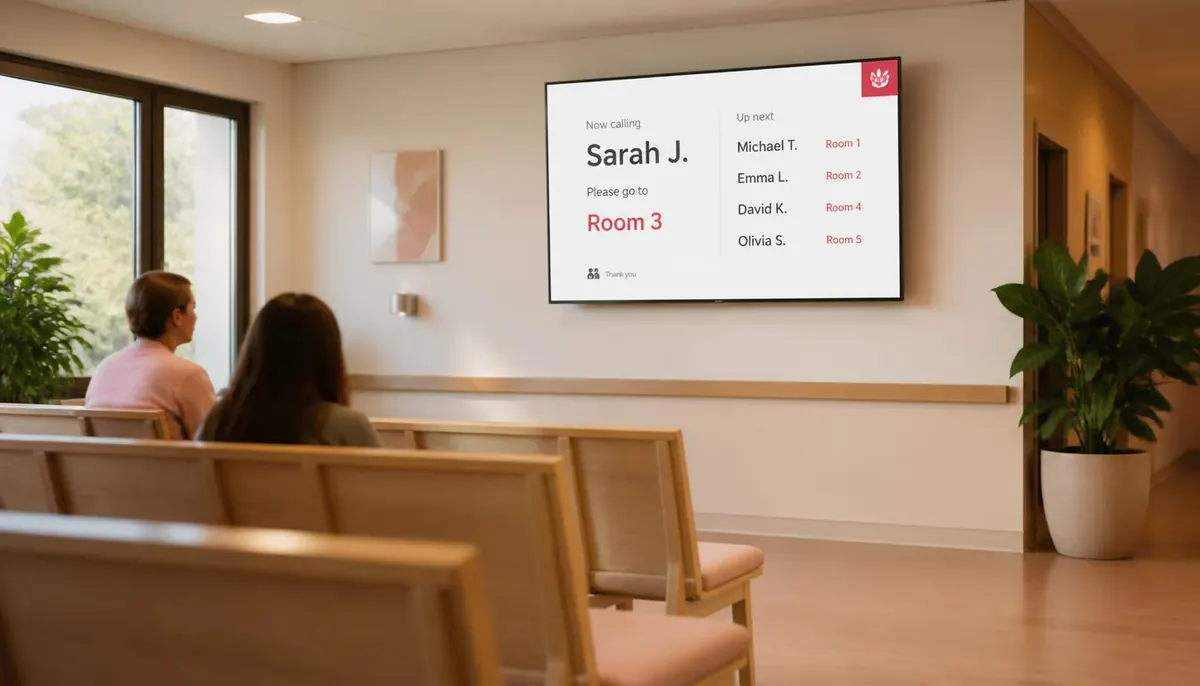
The screen above is what you publish. This is where it ends up.
How it is made
Named against the product's own modules rather than invented for a marketing page.
Rows, arrows and levels are artwork arranged in Composition, not a database view.
Publish to the screens that need this version and no others.
Media is arranged for the screen it is going to.
Users belong to groups; groups decide what a person can reach.
What you get
The information somebody is standing there looking for.
Part of the artwork, so they are as legible as the type beside them.
A composition can rotate languages; the rotation is content, not configuration.
One publish updates every board in the building.
Audits records who changed the directory and when.
A wayfinding screen nobody can read is worse than a printed one, so it is a headline tile.
Who runs this
Nearby
Questions
Not that we can evidence. Touch interaction has not been observed in the console.
Yes. Publish targets the screens you choose.
Users belong to groups, and groups decide what a person can reach.
An Android player app on a display you own.